| Saahib Mera Ek Hai (originale) | Saahib Mera Ek Hai (traduzione) |
|---|---|
| Saahib mera ek hai, duja kaha na jaaye, | Saahib mera ek hai, duja kaha na jaaye, |
| Duja Saahib jo kahun, saahib khada rachaaye. | Duja Saahib jo kahun, saahib khada rachaaye. |
| My Master is one, without a second, | Il mio Padrone è uno, senza secondo, |
| If I see multiplicity, it is also my Master’s play. | Se vedo la molteplicità, è anche il gioco del mio maestro. |
| Maali aavat dekh ke, kaliyaan kare pukar, | Maali aavat dekh ke, kaliyaan kare pukar, |
| Phool phool chun liye, kaal hamari baar. | Phool phool chun liye, kaal hamari baar. |
| Seeing the Master Gardener, the buds whisper to each other: | Vedendo il maestro giardiniere, i boccioli sussurrano l'un l'altro: |
| Fully blossomed ones are plucked away, our appointed day is near. | Quelli completamente sbocciati vengono strappati via, il nostro giorno fissato è vicino. |
| Chhah gayi chinta miti, manva beparvah | Chhah gayi chinta miti, manva beparvah |
| Jinko kachu na chaiye, woh hi Shahenshah. | Jinko kachu na chaiye, woh hi Shahenshah. |
| If cravings are dissolved, worries go, mind becomes free, | Se le voglie si dissolvono, le preoccupazioni svaniscono, la mente diventa libera, |
| He who wants nothing is surely the king of all kings. | Chi non vuole nulla è sicuramente il re di tutti i re. |
| Het preet sun jo mile, ta ko miliye dhaaye | Het preet sun jo mile, ta ko miliye dhaaye |
| Antar raakhe jo mile, taase mile balaaye. | Antar raakhe jo mile, taase mile balaaye. |
| You hasten to meet the ones who meet You with love, | Ti affretti ad incontrare quelli che ti incontrano con amore, |
| Those who meet You with a pure heart, have indeed found a Friend unmatched. | Coloro che Ti incontrano con un cuore puro, hanno davvero trovato un Amico impareggiabile. |
| Kabira te nar andh hai, guru ko kehte aur, | Kabira te nar andh hai, guru ko kehte aur, |
| Har roothe Guru chhod hain, Guru roothe nahi chhod. | Har roothe Guru chhod hain, Guru roothe nahi chhod. |
| Kabir says, blinds are they who realize not the value of a true Master. | Kabir dice, i ciechi sono coloro che non si rendono conto del valore di un vero Maestro. |
| One may seek the shelter of God after displeasing God, | Si può cercare il rifugio di Dio dopo averlo scontento, |
| But there is no refuge after one is refused at the door of a Master. | Ma non c'è rifugio dopo che uno è stato rifiutato alla porta di un maestro. |
| Karta tha to kyun raha, ab kahe pachhtaye, | Karta tha a kyun raha, ab kahe pachhtaye, |
| Bove pe babool ka, aam kahan se hoye. | Bove pe babool ka, aam kahan se hoye. |
| Heedless I committed innumerable wrongs, now I suffer, | Incurante ho commesso innumerevoli torti, ora soffro, |
| Nurturing the thistles of a barren tree, can one expect mango? | Nutrire i cardi di un albero sterile, ci si può aspettare il mango? |
| Sab Dharti kaagad karun, lekhan sab ban raaye, | Sab Dharti kaagad karun, lekhan sab ban raaye, |
| Saat samand ki muss karun, Guru gun likha na jaye. | Saat samand ki muss karun, Guru gun likha na jaye. |
| If the entire earth is a writing tablet, all the forest be its pen, | Se tutta la terra è una tavoletta per scrivere, tutta la foresta sia la sua penna, |
| all waters of seven seas be its ink — even then the Lord’s praises remain | tutte le acque dei sette mari siano il suo inchiostro, anche allora le lodi del Signore rimangono |
| unfinished. | incompiuto. |
| Ab guru dil mein dekheya, gaavan ko kachhu naahin, | Ab guru dil mein dekheya, gaavan ko kachhu naahin, |
| Kabira jab tum gaavate, tab jana Guru nahi. | Kabira jab tum gaavate, tab jana Guru nahi. |
| Once the Lord is recognized within the heart, there is nothing left to be told, | Una volta che il Signore è stato riconosciuto nel cuore, non c'è più niente da dire, |
| Kabir, whenever you tried to utter the mysteries, the knowledge of your Master | Kabir, ogni volta che cercavi di pronunciare i misteri, la conoscenza del tuo Maestro |
| vanishes. | svanisce. |
| Main laaga uss ek se, ek bhaya sab maahin, | Main laaga uss ek se, ek bhaya sab maahin, |
| Sab mera main saban ka, tihan doosara naahin. | Sab mera main saban ka, tihan doosara naahin. |
| I am attached with that One, the One who is with all, | Sono legato a Colui, Colui che è con tutti, |
| When everyone is mine, and I am everyone’s, there ends all duality. | Quando tutti sono miei e io sono di tutti, finisce tutta la dualità. |
| Ja marne se jag dare, mere man anand, | Ja marne se jag osa, semplice uomo e, |
| Kab mar hun kab paahun, puran parmanand. | Kab mar hun kab paahun, puran parmanand. |
| The world trembles at the thought of death, but its a matter of joy for me, | Il mondo trema al pensiero della morte, ma è una questione di gioia per me, |
| When shall I die, when shall I find the perfect joy (of the vision of the | Quando morirò, quando troverò la gioia perfetta (della visione del |
| Beloved)? | Amato)? |
| Sab ban to chandan nahi, shoore ke dal nahi, | Sab ban to chandan nahi, shoore ke dal nahi, |
| sab samundra moti nahi yun Sadhu jag mahi. | sab samundra moti nahi yun Sadhu jag mahi. |
| Neither all forests are of sandalwoods, nor all teams are full of valiant | Né tutte le foreste sono di legno di sandalo, né tutte le squadre sono piene di valori |
| warriors, | guerrieri, |
| nor all seas are filled with pearls; | né tutti i mari sono pieni di perle; |
| likewise the real gnostics of God are | allo stesso modo lo sono i veri gnostici di Dio |
| truly rare. | veramente raro. |
| Jab hum jag mein pag dharyo, sab hanse hum roye, | Jab hum jag mein pag dharyo, sab hanse hum roye, |
| Kabira ab aisi kar chalo, paache hansi na hoye. | Kabira ab aisi kar chalo, paache hansi na hoye. |
| When you came to this mortal world, everyone around you were happy to see you | Quando sei arrivato in questo mondo mortale, tutti intorno a te erano felici di vederti |
| and you were the only one weeping. | e tu eri l'unico a piangere. |
| Kabir, now be in this world such that none laugh at your behind | Kabir, ora sii in questo mondo in modo tale che nessuno ti rida alle spalle |
| but you yourself depart the world laughing, leaving all weeping, mourning. | ma tu stesso te ne vai dal mondo ridendo, lasciando ogni pianto, lutto. |
| Agun kiye to bahu kiye, karat na mani haar, | Agun kiye a bahu kiye, karat na mani haar, |
| Bhaven banda bhakshe, bhaaven gardan maar. | Bhaven banda bhakshe, bhaven gardan maar. |
| Tirelessly so many misdeeds have been committed, | Instancabilmente tanti misfatti sono stati commessi, |
| Now that I’ve realized O Lord, do as You please. | Ora che ho realizzato, o Signore, fai come vuoi. |
| Sadhu bhukha bhaav ka, dhan ka bhookha naahin, | Sadhu bhukha bhaav ka, dhan ka bhookha naahin, |
| Dhan ka bhookha jo phire, so to Saadhu nahi. | Dhan ka bhookha jo phire, quindi a Saadhu nahi. |
| Having no appetite for material wealth, true saints are hungry only for love, | Non avendo appetito per la ricchezza materiale, i veri santi hanno fame solo di amore, |
| Those who thirst after material wealth are not saintly at all. | Coloro che hanno sete della ricchezza materiale non sono affatto santi. |
| Saahib sun sab hott hai, bande te kachhu naahin, | Saahib sun sab hott hai, bande te kachhu naahin, |
| Rai te parbat kare, parbat rai mahi. | Rai te parbat kare, parbat rai mahi. |
| Listen friend! | Ascolta amico! |
| This world has nothing for you, vanity of vanities. | Questo mondo non ha niente per te, vanità delle vanità. |
| Seriously narrow is the passage to salvation, smaller even than the mustard | Seriamente stretto è il passaggio alla salvezza, più piccolo anche della senape |
| seed. | seme. |
| Jyun til mahi tel hai, jyun chakmak mein aag, | Jyun til mahi tel hai, jyun chakmak mein aag, |
| Tera Sain tujh mein base, jaag sake to jaag. | Tera Sain tujh mein base, jaag sake to jaag. |
| Oil is found Inside the sesame seed, inside flinstone is fire, like that | L'olio si trova All'interno del seme di sesamo, all'interno della pietra focaia c'è il fuoco, così |
| Your Lord is within, now awaken to That truth if you dare! | Il tuo Signore è dentro, ora svegliati a quella verità se ne hai il coraggio! |
| — from the Sufi Kalaam of Kabir, the Mystic Saint of Medieval India | — dal sufi Kalaam di Kabir, il santo mistico dell'India medievale |
| (and with additional lines from original) | (e con righe aggiuntive dall'originale) |
Traduzione del testo della canzone Saahib Mera Ek Hai - Ajay Atul, Anand Raj Anand, Abida Parveen
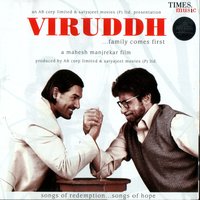
Informazioni sulla canzone In questa pagina puoi leggere il testo della canzone Saahib Mera Ek Hai , di -Ajay Atul
Canzone dall'album: Viruddh
Nel genere:Болливуд
Data di rilascio:08.08.2005
Lingua della canzone:Inglese
Etichetta discografica:Times
Seleziona la lingua in cui tradurre:
Scrivi cosa pensi del testo!
Altre canzoni dell'artista:
| Nome | Anno |
|---|---|
Bhala Hua Meri Matki ft. Ajay Atul, Abida Parveen | 2005 |
| 2020 | |
Saahib Mera Ek Hai ft. Abida Parveen, Anand Raj Anand | 2013 |
| 1990 | |
Saahib Mera Ek Hai ft. Ajay Atul, Abida Parveen | 2013 |
| 2015 | |
| 2015 | |
| 1985 | |
| 2013 | |
Bhala Hua Meri Matki ft. Abida Parveen, Anand Raj Anand | 2005 |
| 2016 | |
| 2016 | |
| 2005 | |
| 2016 | |
| 2015 | |
| 2005 | |
| 2013 | |
| 2013 | |
| 2019 | |
| 2004 |