| Raggle Taggle Gypsy/Tabhair Dom Do Lamh (originale) | Raggle Taggle Gypsy/Tabhair Dom Do Lamh (traduzione) |
|---|---|
| There were three auld gypsies came to our hall door | C'erano tre vecchi zingari venuti alla nostra porta d'ingresso |
| They came brave and boldly-o | Sono venuti coraggiosi e audaci-o |
| And one sang high and the other sang low | E uno cantava alto e l'altro cantava basso |
| And the other sang a raggle taggle gypsy-o | E l'altro ha cantato un taggle gypsy-o |
| It was upstairs, downstairs the lady went | Era al piano di sopra, al piano di sotto è andata la signora |
| Put on her suit of leather-o | Indossa il vestito di pelle |
| And it was the cry all around her door; | Ed era il grido tutt'intorno alla sua porta; |
| «She's away with the raggle taggle gypsy-o» | «Se n'è andata con la zingara arruffata disordinata» |
| It was late that night when the lord came in | Era notte fonda quando entrò il signore |
| Enquiring for his lady-o | Chiedendo per la sua signora-o |
| And the servant girl’s reply to him was; | E la risposta della serva gli fu: |
| «She's away with the raggle taggle gypsy-o» | «Se n'è andata con la zingara arruffata disordinata» |
| «Then saddle for me my milk-white steed | «Allora sella per me il mio destriero bianco latte |
| Me big horse is not speedy-o | Il mio grande cavallo non è veloce |
| And I will ride and I’ll seek me bride | E cavalcherò e cercherò la mia sposa |
| She’s away with the raggle taggle gypsy-o» | È via con la zingara disordinata» |
| He rode east and he rode west | Cavalcò a est e cavalcò a ovest |
| He rode north and south also | Cavalcò anche a nord ea sud |
| And when he rode to the wide open field | E quando cavalcò nel campo aperto |
| It was there that he spied his lady-o | Fu lì che spiò la sua signora |
| «Arra, why did you leave your house and your land | «Arra, perché hai lasciato la tua casa e la tua terra |
| Why did you leave your money-o? | Perché hai lasciato i tuoi soldi? |
| Why did you leave your only wedded lord | Perché hai lasciato il tuo unico signore sposato |
| All for the raggle taggle gypsy-o?» | Tutto per lo zingaro arruffato disordinato?» |
| «Yerra what do I care for me house and me land? | «Yerra di cosa mi preoccupo per la mia casa e per la mia terra? |
| What do I care for money-o? | Che cosa mi importa del denaro? |
| What do I care for me only wedded lord? | Che cosa mi importa di me solo signore sposato? |
| I’m away with the raggle taggle gypsy-o» | Me ne vado con lo zingaro arruffato disordinato» |
| «It was there last night you’d a goose feather bed | «Era lì la scorsa notte che avevi un letto di piume d'oca |
| Blankets drawn so comely-o | Coperte disegnate così comely-o |
| But tonight you lie in a wide open field | Ma stanotte giaci in un campo aperto |
| In the arms of the raggle taggle gypsy-o» | Tra le braccia del raggle taggle gypsy-o» |
| «Yerra, what do I care for me goose feather bed? | «Yerra, cosa mi importa del mio letto di piume d'oca? |
| Yerra, what do I care for blankets-o? | Yerra, di cosa mi preoccupo per le coperte? |
| What do I care for me only wedded lord? | Che cosa mi importa di me solo signore sposato? |
| I’m away with the raggle taggle gypsy-o» | Me ne vado con lo zingaro arruffato disordinato» |
| «Oh, for you rode east when I rode west | «Oh, perché tu cavalcavi verso est quando io cavalcavo verso ovest |
| You rode high and I rode low | Tu hai guidato in alto e io in basso |
| I’d rather have a kiss of the yellow gypsy’s lips | Preferirei baciare le labbra della zingara gialla |
| Than all the cash and money-o» | Di tutti i soldi e i soldi-o» |
Traduzione del testo della canzone Raggle Taggle Gypsy/Tabhair Dom Do Lamh - Planxty
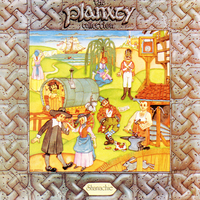
Informazioni sulla canzone In questa pagina puoi leggere il testo della canzone Raggle Taggle Gypsy/Tabhair Dom Do Lamh , di -Planxty
Canzone dall'album: The Planxty Collection
Nel genere:Кельтская музыка
Data di rilascio:19.06.2005
Lingua della canzone:Inglese
Etichetta discografica:Shanachie
Seleziona la lingua in cui tradurre:
Scrivi cosa pensi del testo!
Altre canzoni dell'artista:
| Nome | Anno |
|---|---|
| 2005 | |
| 2005 | |
| 2005 | |
| 1982 | |
| 1982 | |
| 1982 | |
| 2005 | |
| 2005 | |
| 2005 | |
| 2005 | |
| 2005 | |
| 2005 | |
| 2005 | |
| 2005 | |
| 2005 | |
| 2005 | |
| 1979 | |
| 2005 | |
| 2005 | |
| 1978 |