| Mother Country (originale) | Mother Country (traduzione) |
|---|---|
| There was a story in the San Francisco Chronicle that I forgot to save, | C'era una storia nel San Francisco Chronicle che ho dimenticato di salvare, |
| But it was about a lady who lived in the good ol' days | Ma parlava di una donna che visse ai bei vecchi tempi |
| When a century was born and a century had died, | Quando un secolo era nato e un secolo era morto, |
| And about those good old days, well, the old lady replied: | E riguardo a quei bei tempi andati, beh, la vecchia signora rispose: |
| «You know, there was just a lot of people | «Sai, c'era solo un sacco di gente |
| Who were doin' the best they could.» | Che stavano facendo del loro meglio.» |
| She said that the good old days | Ha detto che i bei vecchi tempi |
| Were just a lot of people doin' the best they could. | Erano solo molte persone che facevano del loro meglio. |
| And then the lady said that they did it, pretty up and walkin' good. | E poi la signora ha detto che l'hanno fatto, abbastanza svegli e camminando bene. |
| Whatever happened to those faces in the old photographs? | Che fine hanno fatto quei volti nelle vecchie fotografie? |
| You’ve seen them, the little boys… boys, hell, they were men | Li avete visti, i ragazzini... ragazzi, diavolo, erano uomini |
| Who stood knee deep in the Johnstown mud. | Che rimase fino alle ginocchia nel fango di Johnstown. |
| It was during the time of that terrible flood | Fu durante il periodo di quella terribile alluvione |
| When they listened to the water, that awful noise, | Quando hanno ascoltato l'acqua, quel terribile rumore, |
| And then they just put away the dreams that belonged to little boys. | E poi hanno semplicemente messo da parte i sogni che appartenevano ai bambini. |
| Oh, the sun is going down for Mister Bouie, | Oh, il sole sta tramontando per Mister Bouie, |
| As he’s singing with his class of nineteen-two. | Mentre canta con la sua classe di diciannove-due. |
| Oh, mother country, I do love you. | Oh, madrepatria, ti amo. |
| Oh, mother country, I do love you. | Oh, madrepatria, ti amo. |
| I knew a man named E.A. | Conoscevo un uomo di nome E.A. |
| Stuart, he spelled it S-T-U-A-R-T, | Stuart, lo scriveva S-T-U-A-R-T, |
| And he owned some of the finest horses that I think I’ve ever seen; | E possedeva alcuni dei cavalli più belli che penso di aver mai visto; |
| And he had one favourite, oh, she was champion, the old Campaigner, | E lui aveva una favorita, oh, lei era la campionessa, la vecchia Attivista, |
| And he called her «Sweetheart On Parade», | E l'ha chiamata «Sweetheart On Parade», |
| And she was easily the finest looking horse that the good Lord ever made. | Ed era facilmente il cavallo più bello che il buon Dio abbia mai fatto. |
| But old E.A. | Ma il vecchio E.A. |
| Stuart, he knew he was goin' blind, | Stuart, sapeva che stava diventando cieco, |
| But he said «Before I go I’ve got to drive her one more time.» | Ma lui ha detto: «Prima di andare devo accompagnarla ancora una volta». |
| So people came from miles around, and they stood around the ring | Quindi le persone venivano da miglia intorno e si fermavano attorno al ring |
| But no one said a word, | Ma nessuno ha detto una parola, |
| They just stood there and no one said a thing, | Sono rimasti lì e nessuno ha detto niente, |
| And they’re opening up the gates back there, and here they come | E stanno aprendo i cancelli laggiù, ed ecco che arrivano |
| E.A. | E.A. |
| Stuart in the wagon right behind, | Stuart nel carro proprio dietro, |
| And he’s sittin' straight and proud, | Ed è seduto dritto e orgoglioso, |
| And he’s drivin' her stone blind: | E sta guidando la sua pietra alla cieca: |
| And, would you look at her, ah | E la guarderesti, ah |
| She never looked better or finer than today. | Non è mai stata migliore o più bella di oggi. |
| Yeah, it’s E.A. | Sì, è E.A. |
| Stuart and the old Campaigner, | Stuart e il vecchio Attivista, |
| Sweetheart on Parade, | Tesoro in sfilata, |
| And the people cheer | E la gente esulta |
| While I saw grown men break right down and cry. | Mentre vedevo uomini adulti crollare e piangere. |
| And you know, it was just a little while later | E sai, è stato solo un po' di tempo dopo |
| That old E.A. | Quel vecchio E.A. |
| Stuart died. | Stuart è morto. |
Traduzione del testo della canzone Mother Country - John Stewart
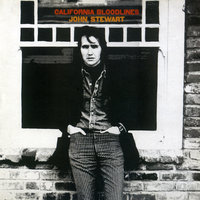
Informazioni sulla canzone In questa pagina puoi leggere il testo della canzone Mother Country , di -John Stewart
Canzone dall'album: California Bloodlines
Nel genere:Музыка мира
Data di rilascio:31.12.1968
Lingua della canzone:Inglese
Etichetta discografica:Capitol
Seleziona la lingua in cui tradurre:
Scrivi cosa pensi del testo!
Altre canzoni dell'artista:
| Nome | Anno |
|---|---|
| 2005 | |
| 1968 | |
| 2005 | |
| 2003 | |
| 2003 | |
| 2003 | |
| 2003 | |
| 2003 | |
| 2003 | |
| 2003 | |
| 2003 | |
| 2003 | |
| 2003 | |
| 2003 | |
| 2003 | |
| 2013 | |
| 1968 | |
| 2005 | |
| 2005 | |
| 2005 |