| No One Questions Things (originale) | No One Questions Things (traduzione) |
|---|---|
| Do you remember…OK. | Ti ricordi... OK. |
| Now, OK. | Ora, va bene. |
| You remember Barbara Bush? | Ricordi Barbara Bush? |
| I call her the silver douche bag. | La chiamo la sacca d'argento. |
| You remember her? | La ricordi? |
| OK. | OK. |
| Barbara Bush. | Barbara Bush. |
| She is the mother of Governor George Bush. | È la madre del governatore George Bush. |
| I call him Governor Bush because that’s the only elected office he ever held legally in our country, OK? | Lo chiamo governatore Bush perché è l'unico incarico eletto che abbia mai ricoperto legalmente nel nostro paese, ok? |
| George Bush, Governor Bush. | George Bush, governatore Bush. |
| Yeah. | Sì. |
| I don’t care where they hang his portrait. | Non mi interessa dove appendono il suo ritratto. |
| I don’t care how big his library is. | Non mi interessa quanto sia grande la sua biblioteca. |
| He’ll always be Governor Bush. | Sarà sempre il governatore Bush. |
| I don’t even capitalize his name when I type it anymore. | Non scrivo nemmeno più in maiuscolo il suo nome quando lo digito. |
| So she’s the mother of Governor George Bush. | Quindi è la madre del governatore George Bush. |
| She’s also the wife of his father, George H. W. Bush who did become president in the normal, legal, traditional manner. | È anche la moglie di suo padre, George H. W. Bush, che è diventato presidente nel modo normale, legale e tradizionale. |
| And when he did, she came along for the ride as first lady, and that’s been the tradition up ’til now. | E quando l'ha fatto, è venuta per il viaggio come first lady, e questa è stata la tradizione fino ad ora. |
| A man has been elected and the woman has come along for the ride as the first lady. | Un uomo è stato eletto e la donna è arrivata per il viaggio come first lady. |
| And usually, as in American life in general, the woman is condescended to, patronized, given something to do to keep her busy. | E di solito, come nella vita americana in generale, alla donna viene condiscendente, condiscendente, con qualcosa da fare per tenerla occupata. |
| A lot of times, they give her a charity or a cause, something she can champion. | Molte volte le danno un ente di beneficenza o una causa, qualcosa che può sostenere. |
| Betty Ford was told to drink. | A Betty Ford è stato detto di bere. |
| Remember that? | Ricordati che? |
| Yeah, that was…that was Betty Ford’s assignment. | Sì, quello era... quello era l'incarico di Betty Ford. |
| “Betty, you get drunk and get totally falling down, fucked-up, shit-faced drunk, OK? | “Betty, ti ubriachi e cadi completamente, ubriaca incasinata e con la faccia di merda, ok? |
| You just get fucked up drunk, and we’ll hose you down, baby. | Ti ubriachi e ti ubriachiamo e ti irrighiamo, piccola. |
| We’ll hose you down. | Ti irrigheremo. |
| We’ll put you in a facility, you’ll get sober, and then we’ll put your name on the facility. | Ti metteremo in una struttura, diventerai sobrio e poi metteremo il tuo nome sulla struttura. |
| Liza Minnelli can get sober, and everything is going to be OK. | Liza Minnelli può diventare sobria e tutto andrà bene. |
| Right?” | Giusto?" |
| That was her assignment. | Questo era il suo compito. |
| Barbara Bush’s assignment was getting children to read. | Il compito di Barbara Bush era far leggere ai bambini. |
| Remember that? | Ricordati che? |
| Getting children to read. | Far leggere ai bambini. |
| They figured she had had so much success with George that she would be a natural to get children to read, which misses the point completely. | Pensavano che avesse avuto così tanto successo con George che sarebbe stato naturale convincere i bambini a leggere, il che sfugge completamente il punto. |
| Not important to get children to read. | Non è importante che i bambini leggano. |
| Children who want to read are going to read. | I bambini che vogliono leggere leggeranno. |
| Kids who want to learn to read are going to learn to read. | I bambini che vogliono imparare a leggere impareranno a leggere. |
| Much more important to teach children to question what they read. | È molto più importante insegnare ai bambini a mettere in discussione ciò che leggono. |
| Children should be taught to question everything. | Ai bambini dovrebbe essere insegnato a mettere in discussione tutto. |
| To question everything they read, everything they hear. | Mettere in discussione tutto ciò che leggono, tutto ciò che sentono. |
| Children should be taught to question authority. | Ai bambini dovrebbe essere insegnato a mettere in discussione l'autorità. |
| Parents never teach their children to question authority because parents are authority figures themselves, and they don’t want to undermine their own bullshit inside the household. | I genitori non insegnano mai ai propri figli a mettere in discussione l'autorità perché i genitori sono essi stessi figure di autorità e non vogliono minare le proprie stronzate all'interno della famiglia. |
| So, they stroke the kid and the kid strokes them, and they all stroke each other, and they all grow up all fucked up, and they come to shows like this. | Quindi, accarezzano il bambino e il bambino accarezza loro, e tutti si accarezzano a vicenda, e crescono tutti incasinati, e vengono a spettacoli come questo. |
Traduzione del testo della canzone No One Questions Things - George Carlin
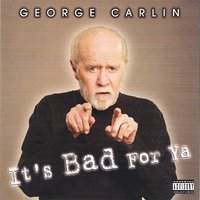
Informazioni sulla canzone In questa pagina puoi leggere il testo della canzone No One Questions Things , di -George Carlin
Canzone dall'album: It's Bad For Ya
Data di rilascio:31.03.2008
Lingua della canzone:Inglese
Etichetta discografica:Laugh.com
Limitazioni di età: 18+
Seleziona la lingua in cui tradurre:
Scrivi cosa pensi del testo!
Altre canzoni dell'artista:
| Nome | Anno |
|---|---|
| 2021 | |
| 2021 | |
| 1999 | |
| 2008 | |
| 2008 | |
| 2006 | |
| 1999 | |
| 2021 | |
| 1999 | |
| 1999 | |
| 2008 | |
| 2008 | |
| 2008 | |
| 2008 | |
| 1999 | |
| 1999 | |
| 2021 | |
| 1999 | |
| 2006 | |
| 2008 |