| Red Army Blues (originale) | Red Army Blues (traduzione) |
|---|---|
| When I left my home and my family | Quando ho lasciato la mia casa e la mia famiglia |
| my mother said to me | mi ha detto mia madre |
| «Son, it’s not how many Germans you kill that counts | «Figlio, non conta quanti tedeschi uccidi che conta |
| It’s how many people you set free!» | È quante persone liberi!» |
| So I packed my bags | Quindi ho fatto le valigie |
| brushed my cap | spazzolato il mio cappello |
| Walked out into the world | Uscì nel mondo |
| seventeen years old | diciassettenne |
| Never kissed a girl | Mai baciato una ragazza |
| Took the train to Voronezh | Ho preso il treno per Voronezh |
| that was as far as it would go Changed my sacks for a uniform | questo era il massimo che avrebbe cambiato i miei sacchi con un'uniforme |
| bit my lip against the snow | mordimi il labbro contro la neve |
| I prayed for mother Russia | Ho pregato per la madre Russia |
| in the summer of '43 | nell'estate del '43 |
| And as we drove the Germans back | E mentre riportavamo indietro i tedeschi |
| I really believed | Ci credevo davvero |
| That God was listening to me We howled into Berlin | Che Dio mi stesse ascoltando Abbiamo ululato a Berlino |
| tore the smoking buildings down | demolito gli edifici fumanti |
| Raised the red flag high | Alza la bandiera rossa in alto |
| burnt the reichstag brown | bruciato il reichstag marrone |
| I saw my first American | Ho visto il mio primo americano |
| and he looked a lot like me He had the same kinda farmer’s face | e mi somigliava molto. Aveva la stessa faccia da contadino |
| said he’d come from some place called Hazzard, Tennessee | ha detto che veniva da un posto chiamato Hazzard, nel Tennessee |
| Then the war was over | Poi la guerra era finita |
| my discharge papers came | sono arrivate le mie carte di congedo |
| Me and twenty hundred others | Io e altri venticento |
| went to Stettiner for the train | è andato a Stettiner per il treno |
| Kiev! | Kiev! |
| said the commissar | disse il commissario |
| from there your own way home | da lì la tua strada di casa |
| But I never got to Kiev | Ma non sono mai arrivato a Kiev |
| we never came by home | non siamo mai venuti da casa |
| Train went north to the Taiga | Il treno è andato a nord verso la Taiga |
| we were stripped and marched in file | siamo stati spogliati e fatti marciare in file |
| Up the great siberian road | Su la grande strada siberiana |
| for miles and miles and miles and miles | per miglia e miglia e miglia e miglia |
| Dressed in stripes and tatters | Vestito a strisce e brandelli |
| in a gulag left to die | in un gulag lasciato a morire |
| All because Comrade Stalin was scared that | Tutto perché il compagno Stalin ne aveva paura |
| we’d become too westernized! | diventeremmo troppo occidentalizzati! |
| Used to love my country | Amavo il mio paese |
| used to be so young | era così giovane |
| Used to believe that life was | Credevo che la vita fosse |
| the best song ever sung | la miglior canzone mai cantata |
| I would have died for my country | Sarei morto per il mio paese |
| in 1945 | nel 1945 |
| But now only one thing remains | Ma ora rimane solo una cosa |
| but now only one thing remains | ma ora rimane solo una cosa |
| But now only one thing remains | Ma ora rimane solo una cosa |
| but now only one thing remains | ma ora rimane solo una cosa |
| The brute will to survive! | La volontà bruta di sopravvivere! |
Traduzione del testo della canzone Red Army Blues - The Waterboys
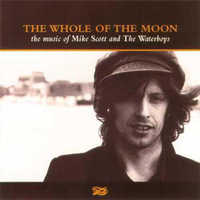
Informazioni sulla canzone In questa pagina puoi leggere il testo della canzone Red Army Blues , di -The Waterboys
Nel genere:Иностранный рок
Data di rilascio:21.09.1998
Lingua della canzone:Inglese
Seleziona la lingua in cui tradurre:
Scrivi cosa pensi del testo!
Altre canzoni dell'artista:
| Nome | Anno |
|---|---|
| 1988 | |
| 1988 | |
| 1988 | |
| 1991 | |
| 1988 | |
| 1988 | |
| 1985 | |
| 1990 | |
| 2017 | |
| 2010 | |
| 1990 | |
| 1990 | |
| 1990 | |
| 1993 | |
| 1990 | |
| 1993 | |
| 1993 | |
| 1990 | |
| 1993 | |
| 1990 |